How to Organize Kitchen Cabinets for Maximum Efficiency
Updated Jul 2026
Some links on this page are affiliate links. If you buy through them we may earn a small commission at no extra cost to you. We only recommend what we'd use.
- Maximize vertical space
- Zone cabinets by activity
- Purge unused items
- Install functional hardware

How to Organize Kitchen Cabinets for Maximum Efficiency
The best way to organize kitchen cabinets is to clear out unused items, create functional activity zones based on daily habits, and add hardware like risers or pull-outs to maximize depth and height. Taking a structured approach simplifies cooking, reduces frustration, and keeps your kitchen counters clear of daily clutter.
🛍 Ready to buy? Check current prices on Amazon for the picks in this guide.
Decluttering: The Essential First Step
Effective cabinet organization requires removing everything from your shelves to discard expired goods, duplicate utensils, and unused gadgets before putting anything back. Emptying your cabinets forces an honest assessment of what you actually cook with daily, preventing you from neatly arranging trash or items you will never use again.
Most kitchens collect clutter over time without anyone noticing. Extra coffee mugs, duplicate plastic containers missing their lids, and specialty appliances bought for a single recipe quietly steal prime shelf space. When you pull everything out into the light, you see the full inventory at once. It can look like a mess while you do it, but clearing the slate is the only reliable way to rebuild a functional setup that lasts.
Why Decluttering Matters
Decluttering eliminates visual chaos and recovers lost cabinet storage, making daily meal prep faster while saving money by preventing duplicate grocery purchases. When shelves are crammed with forgotten items, cooking becomes frustrating, and food spoils unnoticed at the back of dark cupboards long before you ever get around to using it.
Homeowners often report that half the battle with kitchen chaos isn't a lack of square footage—it's storing things they no longer need. When every item on a shelf serves a purpose, you aren't fighting through five unused pans just to grab the one skillet you rely on every night. That friction-free experience makes cooking enjoyable again.
The Decluttering Process
The simplest decluttering process involves emptying one cabinet entirely, wiping down the interior shelves, and sorting items into keep, donate, and discard piles. Working one cabinet at a time keeps the project manageable, preventing your entire kitchen counter from becoming an overwhelming zone of half-finished chaos mid-afternoon.
As you sort, ask yourself when you last used each item. If an appliance or pan hasn't touched the stove in over a year, it's a prime candidate for donation. Be direct with yourself about duplicate tools; nobody needs four soup ladles or six identical rubber spatulas. Wipe down the bare shelf, let it dry, and only return items that earned their spot.
Zone Your Kitchen: A Functional Layout
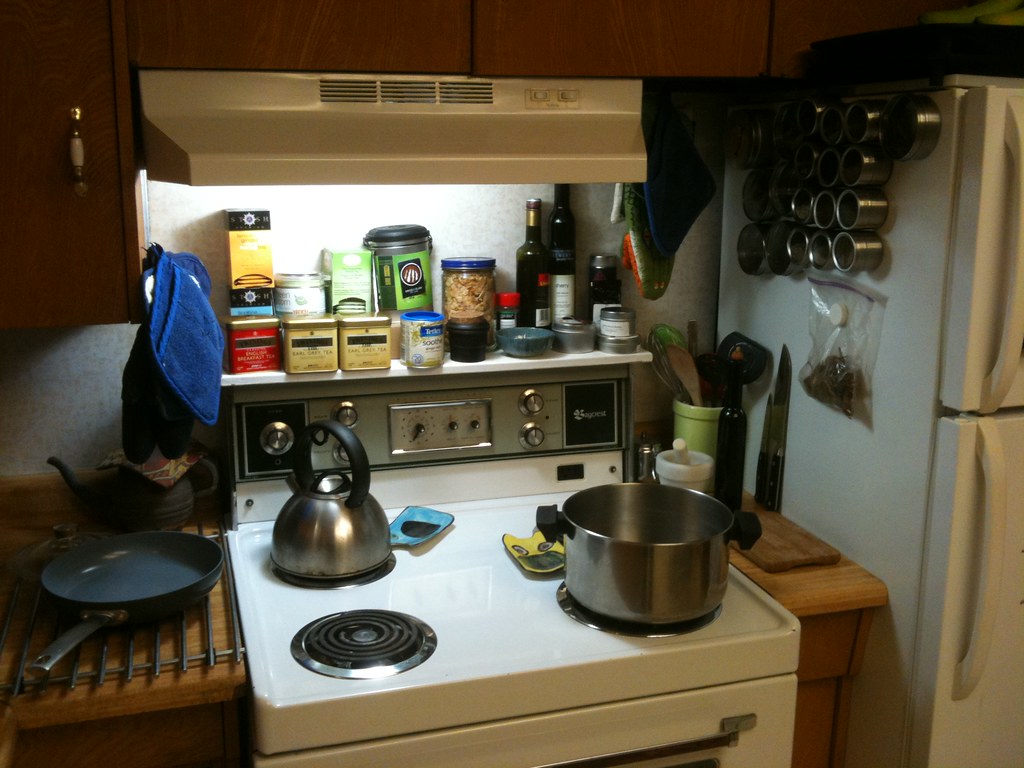
Grouping kitchen tools and ingredients into dedicated functional zones keeps high-use items exactly where you perform specific cooking tasks. Instead of scattering spices across three different cupboards, placing baking supplies near your prep station and oils right beside the stove streamlines meal production and makes cleanup infinitely easier for everyone in the household.
Think of your kitchen like a professional line station. The goal is to minimize steps during busy morning rushes or dinner prep. When your routine flows naturally from one spot to the next, meal production becomes seamless.
Identifying Zones
You can identify kitchen zones by tracking where you prep, cook, clean, store food, and serve daily meals over a typical week. Mapping these primary activity spots highlights where items naturally belong, such as keeping cutting boards near the trash bin or coffee mugs directly above your hot beverage maker.
Standard zones generally break down into five main categories:
- Prep Zone: Cutting boards, chef's knives, mixing bowls, and measuring tools.
- Cooking Zone: Pots, pans, cooking utensils, spices, and cooking oils near the stove.
- Cleaning Zone: Trash bags, dish soap, scrubbers, and cleaning towels around the sink.
- Food Storage Zone: Dry pantry items, canned goods, and leftover containers.
- Serving Zone: Everyday plates, bowls, glasses, and flatware near the dishwasher or table.
Cabinet Placement within Zones
Store daily essentials between shoulder and knee height in prime cabinet real estate, reserving top shelves and back corners for seasonal items. Placing heavy Dutch ovens or lightweight baking sheets in ergonomically sensible spots reduces physical strain and keeps your most frequent workflows smooth, safe, and completely frictionless.
Upper cabinets directly above your primary prep area should house spices, mixing bowls, and everyday dry ingredients. Lower cabinets work better for heavy items like cast iron skillets or bulky appliances. Keep top shelves for holiday platters, vase storage, or items you only reach for once or twice a year.
Vertical Space: Utilizing Every Inch
Utilizing vertical cabinet space prevents wasted air gap between shelves, effectively doubling your usable storage footprint without remodeling. Most standard builder-grade cabinets feature tall shelf spacing, which causes homeowners to stack items awkwardly or leave the upper half of every single cabinet cupboard completely empty and unused.
Instead of letting that upper headroom go to waste, you can add simple drop-in modular organizers. These tools capture vertical real estate without requiring permanent renovation or custom carpentry.
Shelf Risers
Shelf risers create secondary levels within individual cabinet shelves, allowing you to store plates, bowls, or cans without stacking them directly together. These simple metal or acrylic platforms give you quick individual access to stacked tableware without requiring you to lift heavy piles just to grab a single bottom dish.
Risers work particularly well in dish cabinets where you store different sizes of plates or saucers. Instead of stacking salad plates on top of dinner plates—which forces you to unstack them every single meal—a riser lets each size rest on its own dedicated level for effortless access.
Door Organizers
Door organizers attach to the inner panels of cabinet doors, turning underutilized flat surfaces into accessible storage racks for small, lightweight items. Mounting spice racks, measuring spoons, or foil rolls inside cabinet doors frees up valuable interior shelf depth while keeping essential tools visible the moment you swing a door open.
Before installing door racks, check that the inside clearance allows the door to close fully without bumping against main shelf contents. Stick-on adhesive hooks or over-the-door wire baskets offer a quick fix without damaging wood finishes.
Stackable Containers
Modular stackable containers protect bulk dry ingredients from pests while maximizing every inch of vertical shelf height in your pantry. Uniform square or rectangular clear bins eliminate the messy clutter of mismatched half-empty bags, letting you check pantry inventory at a quick glance before heading out to buy groceries.
Round jars leave empty gaps between containers, whereas square options fit flush against cabinet walls. Look for airtight silicone seals if you're storing flour, sugar, coffee, or grains to preserve freshness longer.
Specialized Storage Solutions
Hardware upgrades like Lazy Susans, pull-out drawers, and drawer dividers fix common structural flaws in standard deep or blind-corner kitchen cabinets. Adding purpose-built inserts turns hard-to-reach dark corners into easily accessible storage, saving your back from constant twisting and reaching into deep, dark cabinetry.
These additions bridge the gap between basic cabinets and expensive custom joinery. A few targeted hardware choices turn dark, awkward spaces into usable storage areas.
Lazy Susans
A Lazy Susan uses a rotating turntable mechanism to bring items hidden in deep corners or back shelves directly to the front. Placing oil bottles, condiments, or small spice jars on a turntable prevents items from getting lost or knocked over in deep corner cabinets that are usually impossible to reach easily.
Single-tier turntables work wonders for high-density items like vinegar and cooking oils near the stove. Double-tier models suit corner pantry shelves, keeping small cans visible with a gentle spin.
Pull-Out Shelves
Pull-out sliding shelves convert deep lower cabinets into sliding drawers that bring heavy cookware directly out into full light and reach. Installing rolling tracks eliminates the painful bending, kneeling, and blind digging traditionally needed to retrieve large pots, pans, or heavy kitchen appliances hidden away in lower cupboards.
Retrofit sliding drawers are available in standard cabinet widths and typically install directly into existing shelf holes or cabinet bases. They transform lower cabinet storage for anyone looking to reduce physical strain while cooking.
Drawer Dividers
Drawer dividers compartmentalize wide, open drawers into neat sections tailored to specific utensils, cutlery, and specialized cooking tools. Adjustable inserts prevent loose tools from tangling into a frustrating mess, ensuring you can grab a whisk, spatula, or peeler instantly without digging through a cluttered pile during cooking.
Customizable bamboo or tension-loaded plastic dividers give every item a fixed channel. When tools have clear boundaries, they stop migrating into tangled piles every time you shut the drawer.
Comparing Cabinet Organization Tools
Selecting the right organization tool depends on your cabinet layout, overall budget, and the specific items causing clutter in your kitchen. Comparing vertical risers, turntables, and sliding hardware side-by-side helps you decide where to invest for maximum practical impact without overspending on unnecessary specialized gadgets for your home.
| Tool | Best For | Investment Level | Key Advantage |
|---|---|---|---|
| Shelf Risers | Plates,FAQHow can I maximize space in my kitchen cabinets?Utilize vertical space with shelf risers and stackable containers. Consider pull-out organizers for deep cabinets and door-mounted racks for smaller items. Declutter regularly to keep things manageable. What’s the best way to organize pots and pans?Store frequently used items within easy reach. Use pot racks, dividers, or stackable organizers. Lighter, less-used items can go higher up or in less accessible areas. Should I organize by frequency of use?Yes! Items used daily should be readily accessible. Less frequently used items can be stored higher or further back. This ensures efficiency and reduces clutter. 🛍 See today's best prices on Amazon and grab the option that fits you. |